
Chief Selector Explains Why Nahid Needed Game Time Before the Australia Series
97 Repoter: 97admin
Publish : 17 hours agoUpdate: 1 second ago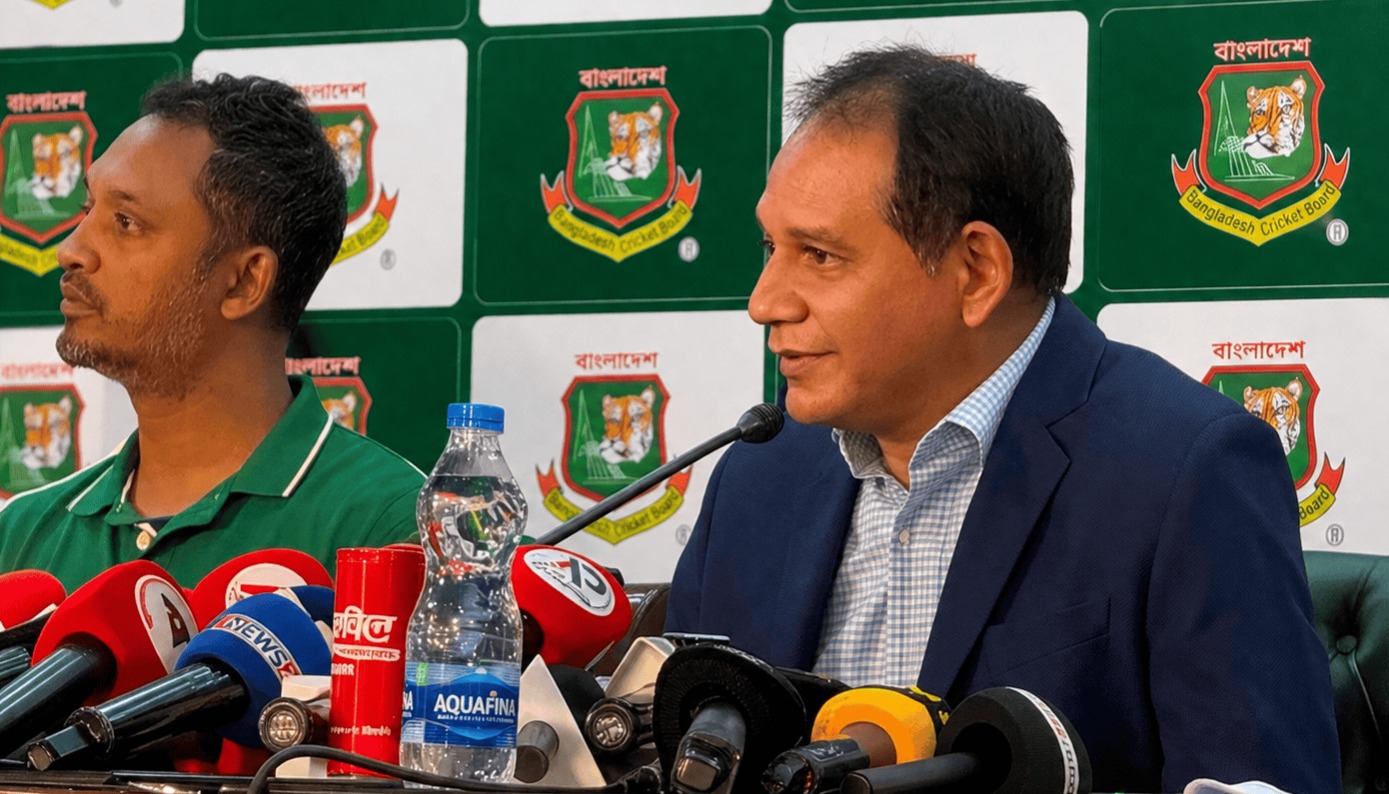
Chief Selector Explains Why Nahid Needed Game Time Before the Australia Series
Chief Selector Explains Why Nahid Needed Game Time Before the Australia Series
Chief Selector Explains Why Nahid Needed Game Time Before Australia Series
Bangladesh had major plans for pace sensation Nahid Rana ahead of the upcoming Test series in Australia. However, those plans suffered a significant blow when the young fast bowler picked up an injury during the T20I series against Zimbabwe, ruling him out of the much-anticipated tour. His absence immediately raised questions over why he had been played against Zimbabwe with such an important Test assignment approaching. Bangladesh chief selector Habibul Bashar Sumon has now addressed the criticism, describing the decision as part of a scientific workload-management strategy rather than a gamble.
Bangladesh are set to play a two-match Test series in Australia for the first time in more than two decades, with the opening Test scheduled to begin in Darwin on August 13. But the team will travel without key players Nahid Rana and Litton Das, increasing concerns ahead of the challenging tour.
Bashar explained that the management of Bangladesh’s fast bowlers is now driven by technology and data rather than traditional planning. Every movement of the players is monitored through GPS trackers, and decisions about match participation are made on the basis of scientific analysis.
“Nahid Rana’s workload management is no longer just a discussion point,” Bashar said. “We monitor every movement through GPS trackers, and based on that data we determine how many matches a player should play in a series. This applies not only to Nahid, but also to Taskin and all our fast bowlers.”
The chief selector said Nahid’s schedule before the Australia tour had been carefully planned. According to the workload data and the physio’s report, he was fit enough to play Test cricket. However, Bangladesh chose to rest him from the home Test series as an additional precaution because of the importance of the Australia tour.
Responding to criticism over Nahid’s participation against Zimbabwe, Bashar argued that keeping a fast bowler away from competitive cricket for too long can also increase the risk of injury. Maintaining match rhythm was therefore considered essential.
“Many people may think we could have rested him,” he said. “But there is a technical side to workload management. Nahid was in good condition during the ODIs and played two of the three matches. Unfortunately, he felt pain during the second T20I.”
Bashar also revealed that the team follows a three-zone workload system—Red, Yellow and Green. If a fast bowler exceeds the recommended workload, he enters the Red Zone and becomes more vulnerable to injury. On the other hand, if his workload becomes too low, the risk of injury also increases. To remain in the safest Green Zone, a bowler must complete a certain number of deliveries and maintain his bowling rhythm.
“Simply put, keeping a fast bowler on the sidelines for a long period is not good for him,” Bashar explained. “He needs to stay in a certain bowling rhythm. That is exactly why Nahid was played. It is extremely unfortunate that he got injured, but the same injury could just as easily have happened in Australia.”
Concluding his remarks, Bashar acknowledged that injuries are an unavoidable part of fast bowling despite every precaution. He said the Bangladesh Cricket Board is providing Nahid with special care and following strict protocols, but eliminating injuries completely is impossible; the best that can be done is to reduce the risk as much as possible.


